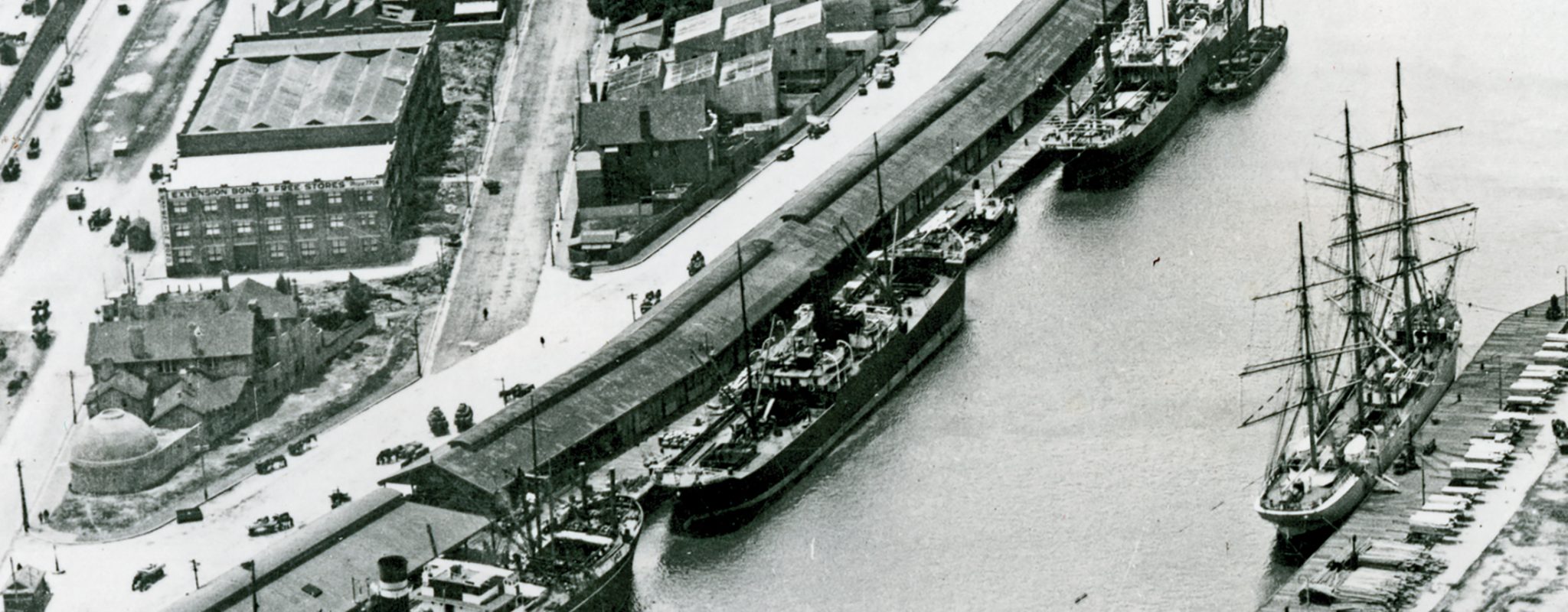
The Seafarers site’s enthralling history and connections with the Yarra River stretch far and wide, from the trade union riots during the Great Depression to the early shift in the 1960s to cargo containerisation that made the Port of Melbourne the largest cargo port in the southern hemisphere.
‘Birrarung’, or the Yarra River, can be literally translated as ‘river of mists and shadows’; a fitting name for this mystical area. It was a home, an inspiration and a gateway for adventure for thousands of years for the Yalukit-willam people and has remained so for Melbournians since first European settlement in the 1830s.
The Gold Rush of the 1850s did more than simply transform the economic and social landscape of Melbourne’s once colonial townscape. The successful mining of this precious metal also resulted in the acute congestion of Melbourne’s port, which brewed a sea of new opportunities for the North Wharf.
The sudden influx of immigrants and cargo into this now flourishing city created a demand for new infrastructure, and the Seafarers site was immediately considered. As the construction workers of the early 1940s toiled away at laying the foundations for turning the north shore of the river into a series of wharves and goods sheds, they had no way of predicting the rich history that they were weaving for the site, brick by brick.
However, it wasn’t all smooth sailing for No.5 – in 1930, 3,000 to 4,000 unionists and volunteers were caught in a ‘scuffle’ outside the shed. Both groups were disgruntled about rising levels of unemployment due to the Depression. While during the Vietnam War, No.5 was one of three assembly points for Melbourne’s third anti-Vietnam war Moratorium.
After decades of prolific use and the Great Depression of the 1930s, the shed had become outdated. It was time for a revamp, and the construction of the new shed began in 1940, to be completed between 1941 and 1942. The new shed had 4.25 metre high sliding doors, allowing ample headroom for the movement of cargo in and out. It was the first on the Yarra to have a road-transport loading bay, the first fireproof shed in the Port of Melbourne, and had a state-of-the-art travelling electric crane.
Even today, berth No. 5 North Wharf is listed on the Victorian Heritage Register as a site of State significance. The No. 5 wharf, shed and Malcolm Moore electric crane is identified as being of ‘historical and scientific (technological) significance to the State of Victoria as the most complete and intact cargo berth in the Port of Melbourne remaining from the pre-containerisation era’.
By the turn of the twentieth century, 90 per cent of all goods imported to Victoria traversed the wharfs of the Yarra and Victoria Dock. This site was not only a vibrant area of trade and capital, but also the first impression many from lands afar will have had of the city of Melbourne.
The demise of all the north and south shore wharves began in the 1960s with the introduction of containerisation. Today, however, the true gravity of the area’s rich history is being acknowledged, and the hum of the bustling banks being brought back to life with the establishment of Seafarers.